Written by
Moydus Team
At
Thu Jan 01 2026
Web Design Trends for 2026
Discover the top web design trends shaping 2026. From AI integration to immersive experiences, learn what's defining modern web design.
The Evolution of Web Design
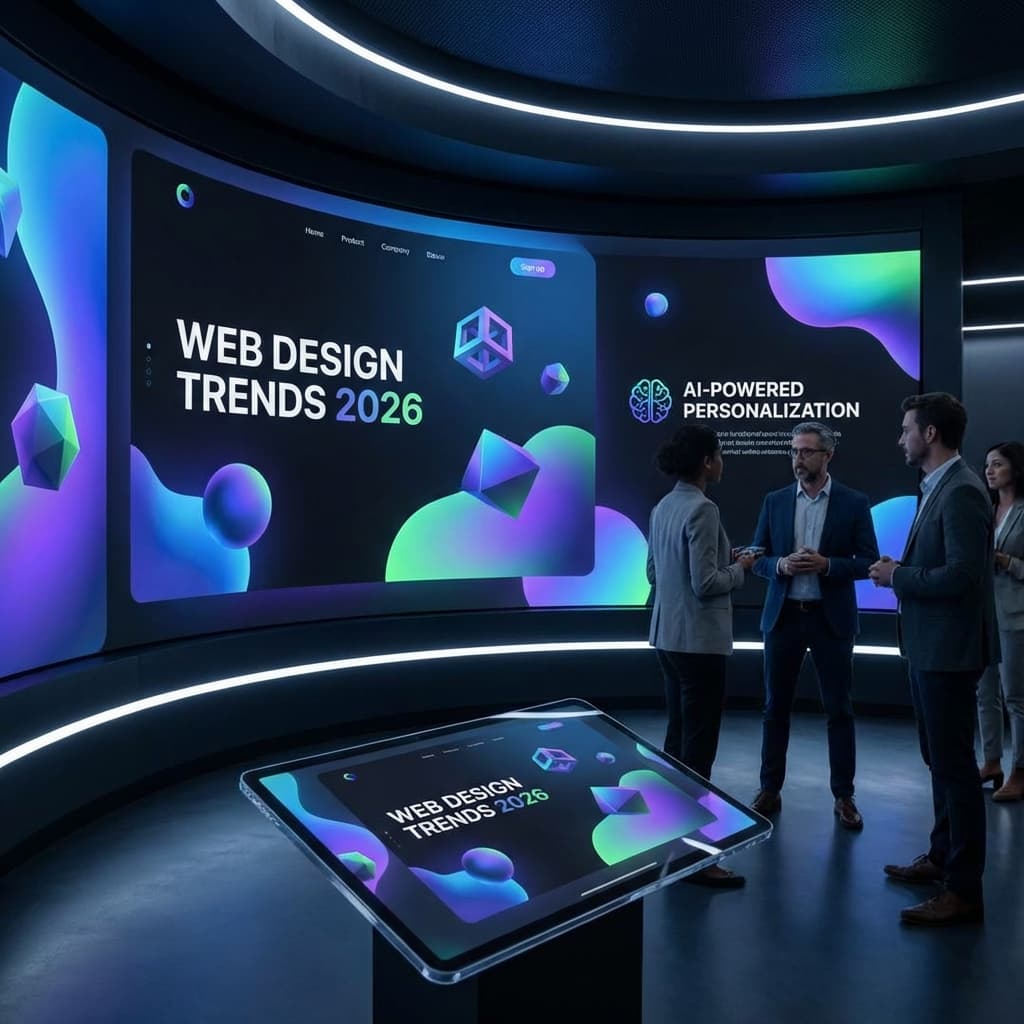
Web design continues to evolve rapidly, driven by technological advances, changing user expectations, and new creative possibilities. Here are the trends defining web design in 2026.
Visual Design Trends
Immersive 3D Experiences
Three-dimensional elements have moved from novelty to mainstream.
Applications:
- Product showcases
- Interactive backgrounds
- Navigation elements
- Storytelling devices
Technologies:
- Three.js
- Spline
- WebGL
- React Three Fiber
Example uses:
- E-commerce product rotation
- Portfolio piece displays
- Brand storytelling
- Game-like interfaces
AI-Generated Visuals
AI is creating unique, on-demand visual content.
Uses:
- Hero images
- Background patterns
- Illustrations
- Custom iconography
Benefits:
- Unique imagery
- Rapid generation
- Cost efficiency
- Endless variation
Kinetic Typography
Text that moves with purpose.
Techniques:
- Scroll-triggered animation
- Mouse-responsive text
- Loading animations
- Storytelling through motion
Best practices:
- Enhance, don't distract
- Consider accessibility
- Performance optimization
- Purposeful motion
Dark Mode as Default
More sites launching with dark mode first.
Reasons:
- User preference
- OLED optimization
- Eye comfort
- Modern aesthetic
Implementation:
- System preference detection
- Easy toggle
- Proper contrast ratios
- Image adaptation
Organic Shapes & Gradients
Soft, natural forms replacing hard edges.
Characteristics:
- Blob shapes
- Flowing gradients
- Natural curves
- Soft shadows
Applications:
- Section dividers
- Button backgrounds
- Hero sections
- Decorative elements
UX Trends
Micro-Interactions
Small animations that enhance experience.
Examples:
- Button hover states
- Form feedback
- Loading states
- Scroll indicators
- Toggle switches
Principles:
- Subtle but noticeable
- Purposeful feedback
- Consistent behavior
- Performance-minded
Scroll-Based Storytelling
Websites that unfold like stories.
Techniques:
- Parallax effects
- Progressive reveal
- Animation triggers
- Section transitions
Best for:
- Brand stories
- Product launches
- Portfolios
- Case studies
Personalized Experiences
Content adapting to individual users.
Personalization types:
- Location-based
- Behavior-based
- Preference-based
- Device-based
Implementation:
- AI recommendations
- Dynamic content
- Adaptive layouts
- Custom journeys
Voice and Gesture Interfaces
Beyond clicks and taps.
Emerging patterns:
- Voice search
- Voice navigation
- Gesture controls
- Motion interaction
Accessibility benefits:
- Hands-free operation
- Varied input methods
- Inclusive design
Minimalism Evolved
Simplicity with more personality.
Characteristics:
- Generous whitespace
- Strategic typography
- Purposeful color
- Hidden complexity
Evolution:
- More emotional
- Less cold
- Functional beauty
- Intentional choices
Technology Trends
AI-Powered Design
Artificial intelligence in the design process.
Applications:
- Layout generation
- Color suggestions
- Content creation
- A/B testing
Learn more about how AI is changing web design.
No-Code Advancement
More powerful no-code tools.
Capabilities:
- Complex interactions
- Database functionality
- API integrations
- Custom logic
Impact:
- Faster prototyping
- Designer empowerment
- Reduced dev dependency
- Rapid iteration
WebAssembly Adoption
Near-native performance in browsers.
Enables:
- Complex applications
- Better games
- Image/video processing
- CAD and 3D tools
Sustainability Focus
Eco-conscious web design.
Practices:
- Optimized assets
- Green hosting
- Minimal data transfer
- Carbon footprint awareness
Benefits:
- Better performance
- Lower costs
- Positive brand image
- Environmental impact
Content Trends
Short-Form Video
Video content integrated throughout.
Usage:
- Hero backgrounds
- Product demos
- Testimonials
- Tutorials
Best practices:
- Autoplay muted
- Performance optimization
- Fallback images
- Accessibility captions
Interactive Content
User participation in content.
Types:
- Calculators
- Quizzes
- Configurators
- Polls
Benefits:
- Engagement
- Lead generation
- Personalization
- Time on site
Authentic Imagery
Real over stock.
Shift toward:
- Behind-the-scenes
- Real team photos
- User-generated content
- Documentary style
Away from:
- Generic stock
- Obvious poses
- Inauthentic diversity
- Over-polished
Industry Applications
E-commerce
- AR try-on
- Visual search
- AI recommendations
- Sustainable indicators
Explore ecommerce design trends.
SaaS
- Product-led design
- Interactive demos
- Value visualization
- Self-service focus
Portfolio
- Case study depth
- Process showcase
- Immersive projects
- Personal branding
Corporate
- Human-centered
- Purpose-driven
- Accessibility focus
- Employee voices
Implementation Tips
Adopting Trends Wisely
- Evaluate fit - Does it serve your users?
- Consider performance - Will it slow your site?
- Test accessibility - Does it exclude anyone?
- Measure impact - Is it improving metrics?
- Stay authentic - Does it fit your brand?
Avoiding Trend Traps
- Don't follow blindly
- Prioritize usability
- Consider maintenance
- Think long-term
- Stay true to brand
Looking Ahead
Emerging Possibilities
- Spatial computing integration
- Brain-computer interfaces
- Haptic feedback
- Ambient computing
Preparing for Tomorrow
- Build flexible systems
- Prioritize fundamentals
- Stay curious
- Embrace experimentation
Conclusion
The web design trends of 2026 blend technological innovation with human-centered design. The best implementations use these trends purposefully to enhance user experience rather than just following fashion.
Moydus: Trends That Convert
| Trend | How Moydus Implements |
|---|---|
| 3D & Immersive | Performance-optimized, purposeful 3D |
| AI Integration | Human + AI for best results |
| Micro-interactions | Conversion-focused animations |
| Dark Mode | Accessibility-first implementation |
| Personalization | Data-driven customization |
We don't just follow trends—we apply them strategically to improve your conversions.
| Our 2026 Design Philosophy |
|---|
| Purposeful trends - Every element serves a goal |
| Performance first - Beautiful doesn't mean slow |
| Conversion focus - Design that drives results |
| Accessibility always - Inclusive by default |
Ready to implement modern design trends? Explore our web design services or learn about professional web design services.